Every campaign begins with a blank page
Time goes into the first draft instead of reviewing the message.

借助原生集成的 AI 能力生成吸睛标题、翻译 8 国地道文案,并在发送前全面扫描 Spam Score 风险,牢牢锁住收件箱。
一个不经意的垃圾词汇或乏味的标题,足以摧毁团队耗费数月建立的良好域名信誉。
Time goes into the first draft instead of reviewing the message.
The team lacks a shared brief, structure, and editorial rules.
Links, structure, and sensitive wording are not reviewed in advance.
Drafts are used without checking facts, brand context, or compliance.
AI creates options; marketers select, edit, and remain accountable; Spam Score adds a technical review signal.
Use audience, goal, and tone as inputs instead of a generic prompt.
Adapt subject lines and calls to action to the recipient context.
Check content, links, and structure so an editor can address potential issues.
Review facts, brand voice, and required terms before the email enters the queue.
They solve different problems and should never be presented as a deliverability guarantee.
Start from scratch for every campaign.
Generate a draft from an agreed brief and structure.
Duplicate and edit every version by hand.
Generate segment-specific options for editorial review.
Rely on individual experience.
Use a consistent list of signals before sending.
No shared approval step.
An accountable owner approves content and facts.
Attribute the result to one score.
Consider content alongside DNS, reputation, and data quality.
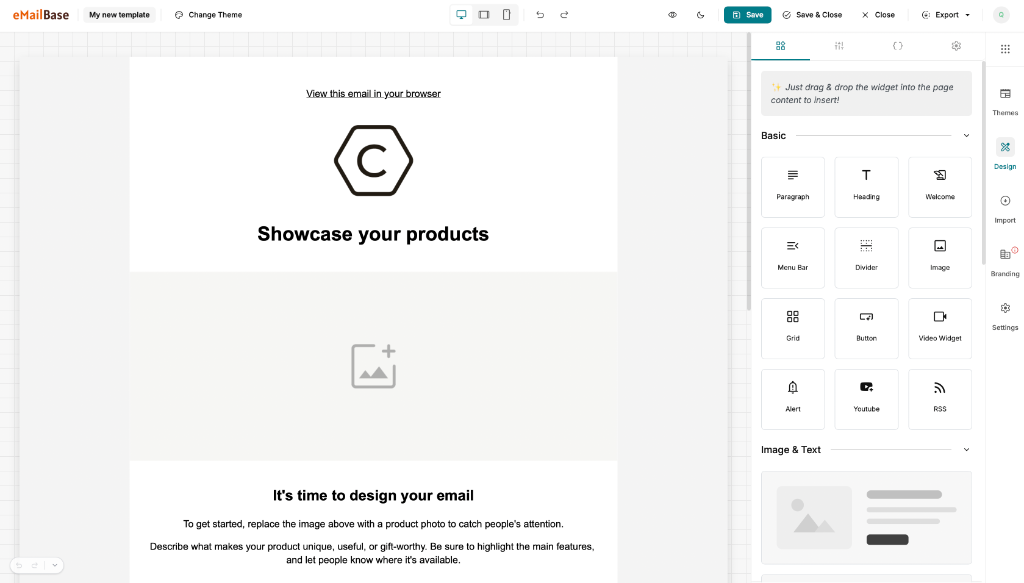
The Template Builder shows where the team edits content. AI suggestions and risk checks belong next to that workflow, not in an unrelated decorative image.
Draft inside the editor
Drag-and-drop content blocks
Review before saving or exporting
Measure from receiving the brief until content is ready for the queue.
Track links, variables, and content issues caught during pre-flight.
Compare engagement across versions sent to the same segment.
Use AI to expand options, not to replace editorial ownership or fact-checking.
No. It covers selected content signals; DNS, sender reputation, list quality, and engagement remain critical.
Always review facts, brand voice, legal requirements, and personalization variables before sending.
Provide a clear brief, preferred language, and editorial rules to produce options closer to your style.
Try a real brief, create several options, and review them before using one in a campaign.